
Search

Senior Principal Research Fellow; Director, FASD Research Australia

A huge congratulations to The Kids Research Institute Australia founding researcher, Emeritus Professor Carol Bower, who has been recognised in the King’s Birthday Honours for her profound impact on child and public health over a 40-year career.
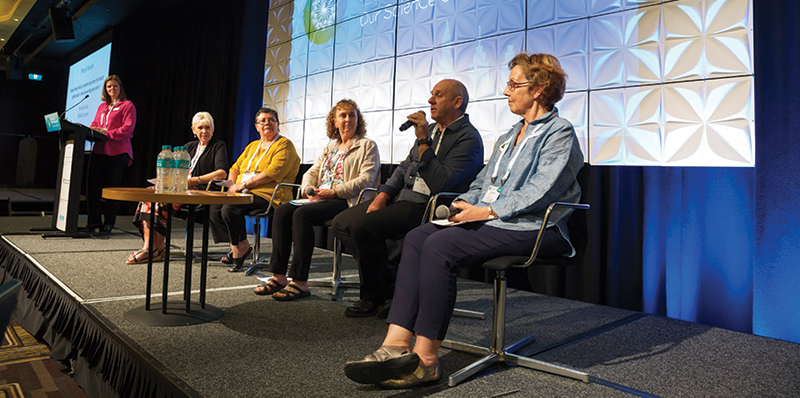
Held every two years, the Australasian FASD Conference is a significant and unifying event for those in the Fetal Alcohol Spectrum Disorder sector.

The two-year study, which was the first in Australia to assess and diagnose young people in a youth custodial setting for Fetal Alcohol Spectrum Disorder.

The Kids is trialling a new tool for earlier and easier screening of FASD and ADHD in children, using cutting-edge eye-tracking technology developed by the Kids Brain Health Network in Canada.
If there’s one thing modern researchers and health professionals now understand, it’s that for so many diseases and conditions affecting children and adolescents, early intervention is crucial.
Alcohol and Other Drug (AOD) exposure during pregnancy is linked to serious adverse child outcomes, including Fetal Alcohol Spectrum Disorder. The Parent-Child Assistance Program (PCAP) supports women with problematic AOD use, who are pregnant or have young children, and are not effectively engaging with services. PCAP has been shown to reduce alcohol exposed pregnancies, promote AOD abstinence, increase employment and family planning and improve child outcomes.
Fetal Alcohol Spectrum Disorder is a neurodevelopmental disorder caused by exposure to alcohol in utero. It has pervasive, lifelong impacts and is recognised as a major public health concern in many countries where alcohol is used. The FASD Research Australia Centre of Research Excellence was funded by the National Health and Medical Research Council to generate and translate evidence to address prevention, diagnosis, and management of FASD in Australia.
Prenatal alcohol exposure is associated with a range of adverse offspring neurodevelopmental outcomes. Several studies suggest that PAE modifies DNA methylation in offspring cells and tissues, providing evidence for a potential mechanistic link to Fetal Alcohol Spectrum Disorder.
Interventions to address alcohol use during pregnancy need to target underlying determinants of the behaviour. Using the theory of planned behaviour as a theoretical framework, the aim of this study was to identify behavioural, normative and control beliefs regarding alcohol use during pregnancy among a sample of women.