
Search
Impetigo is a contagious skin disease caused by Staphylococcus aureus and Streptococcus pyogenes. Without treatment, impetigo may be recurrent, develop into severe disease, or have serious, life-threatening sequelae. Standard treatment consists of topical or systemic antibiotic therapy (depending on severity), however, due to antibiotic resistance some therapies are increasingly ineffective.
Asha Bowen BA MBBS DCH FRACP PhD GAICD FAHMS OAM Head, Healthy Skin and ARF Prevention Head, Healthy Skin and ARF Prevention Areas of expertise: Skin
The role Staphylococcus aureus antimicrobial resistance genes and toxins play in disease severity, management and outcome in childhood is an emerging field requiring further exploration.
Scabies is an important predisposing factor of impetigo which can lead to serious bacterial complications. Ivermectin-based mass drug administration can substantially reduce scabies and impetigo prevalence in endemic settings, but the impact on serious bacterial complications is not known.
Combination antibiotic therapy with an antitoxin agent, such as clindamycin, is included in some guidelines for severe, toxin-mediated Staphylococcus aureus infections. The evidence to support this practice is currently limited to in vitro, animal and observational human case-series data, with no previous randomized controlled trials (RCTs).
In 2019, the Murdoch Children's Research Institute in partnership with the Fiji Ministry of Health and Medical Services carried out an integrated mass drug administration (MDA) for the treatment of scabies and lymphatic filariasis in the Northern Division of Fiji. We conducted a retrospective micro-costing exercise focused on the cost of scabies control in order to inform budgeting and policy decision making in an endemic setting.
Rates of acute rheumatic fever, a sequelae of group A Streptococcal (GAS) infection, remain unacceptably high in Indigenous Māori and Pacific children in New Zealand. This prospective study aimed to describe GAS antibody titres in healthy children (5–14 years) by ethnicity, and to determine how paired titres vary with GAS culture positive and negative pharyngitis, and GAS skin infections.
Asha Jeffrey Bowen Cannon BA MBBS DCH FRACP PhD GAICD FAHMS OAM BSc(Hons) BBus PhD Head, Healthy Skin and ARF Prevention Health Economist
We explore the acceptability of a novel, outreached-based approach to improve primary and primordial prevention of Strep A skin sores, sore throats and acute rheumatic fever in remote Aboriginal communities. A comprehensive prevention program delivered by trained Aboriginal Community Workers was evaluated using approximately fortnightly household surveys about health and housing and clinical records.
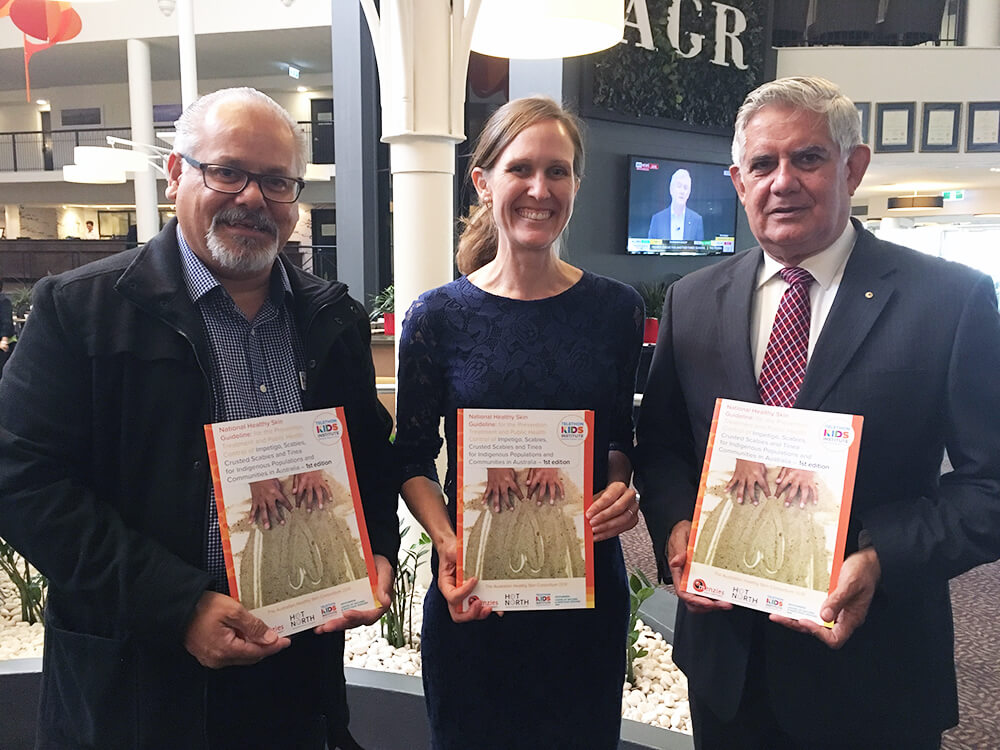
Researchers have developed the first National Healthy Skin Guideline to address record rates of skin infections in Australia’s Indigenous communities.