
Search
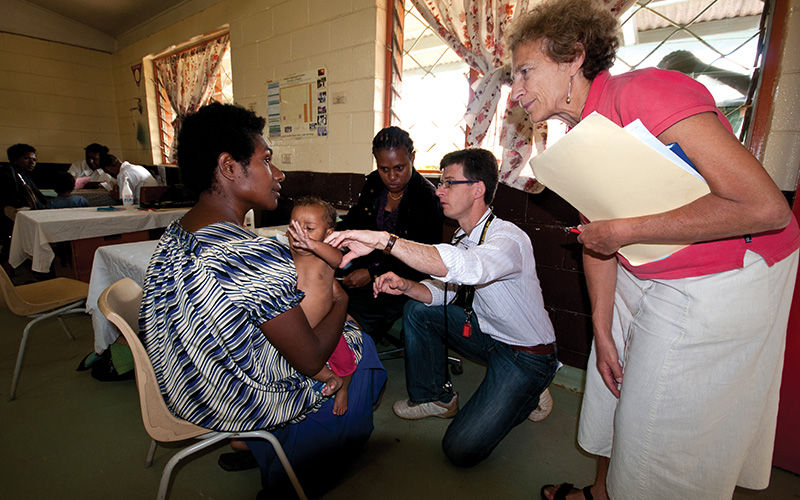
New research has revealed the extraordinary impact of a collaborative project between The Kids Research Institute Australia and the Papua New Guinea Institute of Medical Research, with rates of hospitalisation for pneumonia dropping by nearly 60 per cent thanks to the introduction of the pneumococcal vaccine

Coconut oil has been used on premature babies to help fight off deadly infections. Researchers are now hoping to prove it is effective for other conditions as well.
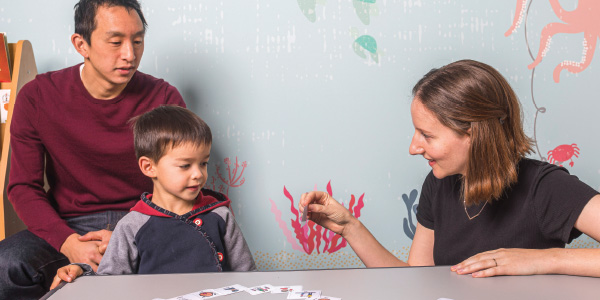
A long-held belief linking gut bacteria to autism has been debunked by an Australian research team that included researchers from CliniKids at The Kids Research Institute Australia.
The prevalence of impetigo and pharyngitis - which are both superficial group A streptococcus (GAS) infections that precede acute rheumatic fever - is poorly defined. Guidelines recommend the early diagnosis of both infections to prevent ARF; however, screening to enable the concurrent detection of these infections in high-risk populations has rarely been performed.
The implications of climate change for malaria eradication this century remain poorly resolved. Many studies focus on parasite and vector ecology in isolation, neglecting the interactions between climate, malaria control and the socioeconomic environment, including disruption from extreme weather. Here we integrate 25 years of African data on climate, malaria burden and control, socioeconomic factors, and extreme weather.
When doctors working within healthcare systems under pressure perpetrate, witness, or fail to prevent acts that contradict their own moral or ethical values and expectations, it can lead to moral distress or moral injury. This can result from active behaviour and from purposeful inactive behaviour. It is a growing and critical concern, representing significant distress that extends far beyond traditional concepts such as burnout. This article discusses moral injury in clinical and academic medicine and actively gives suggestions to prevent and address moral injury.
Pediatric perioperative care can be described as a journey, starting when surgery is first contemplated, all the way through to a patient’s full recovery. For the child and their family, this journey spans from the time at home pre-operatively through a hospital stay and finishes with at-home recovery.
A main challenge identified by youth during exercise and sport is the lack of knowledge and awareness around type 1 diabetes (T1D) particularly in community sport settings. Working with youth living with T1D, parents and community sport coaches, our team has developed resources for the T1D and sporting community. This study was to evaluate the acceptability and usability of the resources.
Allergic diseases are rising worldwide, especially in childhood, and their clinical diversity increasingly exposes the limits of traditional phenotype-based classifications. Genetic susceptibility, environmental exposures, epithelial barrier biology, and immune pathways interact to shape highly variable disease trajectories and treatment responses. In this context, precision medicine is no longer only an aspirational concept, but a practical effort to define meaningful endotypes, identify clinically useful biomarkers, and connect biological insight to prevention and care.
Hand burns are a key criterion for immediate referral to tertiary burn centres in Australia, New Zealand, and internationally, yet few studies have examined how paediatric burn epidemiology, surgical management, and length of stay differ according to the extent of hand involvement.