
Search
Despite increasing urbanisation, little is known about skin health for urban-living Aboriginal children and young people (CYP, aged <18 years). This study aimed to investigate the primary care burden and clinical characteristics of skin conditions in this cohort.
This study examines whether nonstandard work schedules (NSWS) improve or hinder work-life balance (WLB) for parents and non-parents in dual-earner households.
Respiratory disease is a leading cause of hospitalisations in children with cerebral palsy (CP). Over 40% of individuals with CP are born preterm; however, the relationship between prematurity, CP and respiratory disease is unknown.
Vaccination scholarship focuses on how privilege, individualized choice and ‘intensive’ and ‘natural’ parenthood – often motherhood – lead people to delay or not vaccinate their children. Recently, examining parents’ vaccination responsibilities – and the inequalities in paid employment and unpaid care work underpinning them – has become important to understand COVID-19.
Many children do not accumulate sufficient physical activity for good health and development at early childhood education and care (ECEC). This study examined the association between ECEC organizational readiness and implementation fidelity of an ECEC-specific physical activity policy intervention.
Family carers of youth recovering from early psychosis experience significant stress; however, access to effective family interventions is poor. Digital interventions provide a promising solution.
To examine and synthesise recent evidence on the role of grandparents in shaping children's dietary health.
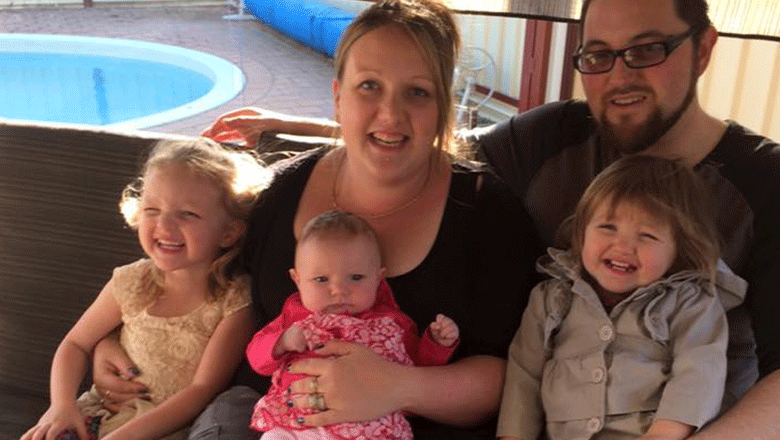
The Kids Research Institute Australia researchers are offering a free nutrition and lifestyle program for plus sized mums and their babies who live in the Joondalup area.
This paper provides the conceptual framework for a new review series that bring together the global literature on population approaches to nurturing relational health across the first three years of life. Early relational health is defined as ‘the everyday interactions that happen between children and their carers across the many settings in which they live and grow.
Indigenous peoples globally have incurred significant harm resulting from colonisation and the forced removal of children from their families, culture, communities and Country. Over the last two decades in Australia, there have been calls for significant reform and there has been a raft of policy changes in child protection services. However the problems are intractable, and the numbers of Indigenous children being removed from their families continues to rise.