
Search
Following widespread exposure to Omicron variants, SARS-CoV-2 has transitioned to endemic circulation. Populations now have diverse infection and vaccination histories, resulting in heterogeneous immune landscapes. Careful consideration of the value of ongoing vaccination is required through the post-Omicron phase of COVID-19 management to minimise disease burden.
The antirelapse efficacy of primaquine is related to the total dose administered, whereas the risks of haemolysis and gastrointestinal intolerance are associated with the daily dose administered. National Malaria Control Programmes require local information on efficacy, tolerability and safety to optimize antimalarial treatment policies for Plasmodium vivax malaria control and elimination efforts.
Nick Rishi S. Laurence Sung Gottardo Kotecha Cheung Chiu MBChB FRACP PhD MB ChB (Hons) MRCPCH FRACP PhD BPharm (Hons) MBA PhD MBBS FRACP FRCPA PhD
Disease spreading models such as the ubiquitous SIS compartmental model and its numerous variants are widely used to understand and predict the behavior of a given epidemic or information diffusion process. A common approach to imbue more realism to the spreading process is to constrain simulations to a network structure, where connected nodes update their disease state based on pairwise interactions along the edges of their local neighborhood.
The first few days of life are characterized by rapid external and internal changes that require substantial immune system adaptations. Despite growing evidence of the impact of this period on lifelong immune health, this period remains largely uncharted.
Streptococcus pneumoniae is a leading cause of pneumonia and meningitis worldwide. Many different serotypes co-circulate endemically in any one location. The extent and mechanisms of spread and vaccine-driven changes in fitness and antimicrobial resistance remain largely unquantified.
This manuscript sheds light on the impact of maternal breast milk antibodies on infant health. Milk antibodies prepare and protect the newborn against environmental exposure, guide and regulate the offspring's immune system, and promote transgenerational adaptation of the immune system to its environment.
Citation: ten Brink DC, Bowring AL, Martin-Hughes R, ……. Shattock A, Palmer T, Maxim C, Zhang S, Scott N. Optimising HIV spending in 12 eastern
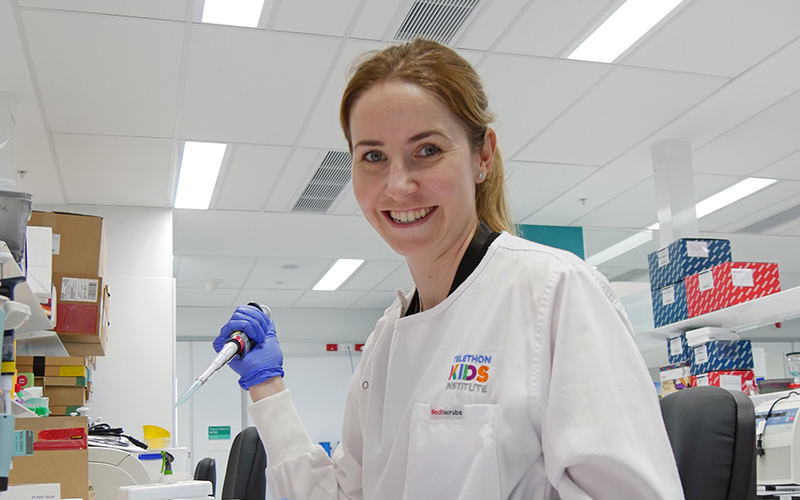
A The Kids Research Institute Australia researcher will work to better understand the immune system mechanisms that cause multiple sclerosis, thanks to a new grant from MS Australia.
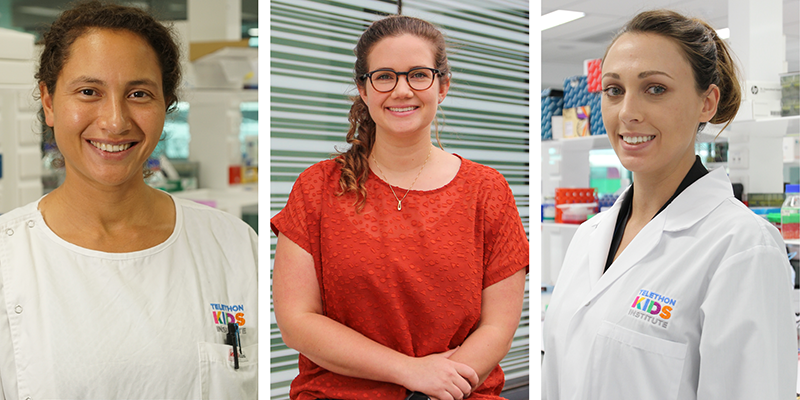
Three outstanding young researchers from The Kids Research Institute Australia have been named Raine Fellows and received valuable Raine Priming Grants to support their child health research.