
Search
Feilman Fellow; Head, Precision Health Research and Head, Translational Intelligence
We have started a project utilising whole genome sequencing of undiagnosed children living in WA to provide a definitive diagnosis. A major challenge here is that the role and functions of the inter-genic regions of our genome (the remaining 98%) are relatively poorly understood.
We are made up of hundreds of different cell types carrying out a diverse range of functions essential for organism survival. All the information required to specify the morphology, function and response to stimuli of these cells is encoded in identical copies of the genome. The process of gene regu
Current technologies to understand which genes are turned on or off only work on large amounts of biological samples. As a consequence all measurements we receive represent averages across multiple cell types present in the sample. The situation is comparable to studying the contents of a bowl of fr
The Kids Research Institute Australia congratulates Prof Gareth Baynam and Dr Timo Lassmann on their grant over three years from the McCusker Charitable Foundation.
Cornelia de Lange Syndrome (CdLS) is a rare, dominantly inherited multisystem developmental disorder characterized by highly variable manifestations of growth and developmental delays, upper limb involvement, hypertrichosis, cardiac, gastrointestinal, craniofacial, and other systemic features.
Computer vision technology is advancing rare disease diagnosis to address unmet needs of the more than 300 million individuals affected globally; one in three rare diseases have a known facial phenotype. 3D face model reconstruction is a key driver of these advances.
Over the last two decades, transcriptomics has become a standard technique in biomedical research. We now have large databases of RNA-seq data, accompanied by valuable metadata detailing scientific objectives and the experimental procedures used. The metadata is crucial in understanding and replicating published studies, but so far has been underutilized in helping researchers to discover existing datasets.
SETBP1 Haploinsufficiency Disorder (SETBD) is characterised by mild to moderate intellectual disability, speech and language impairment, mild motor developmental delay, behavioural issues, hypotonia, mild facial dysmorphisms, and vision impairment. Despite a clear link between SETBP1 mutations and neurodevelopmental disorders the precise role of SETBP1 in neural development remains elusive.
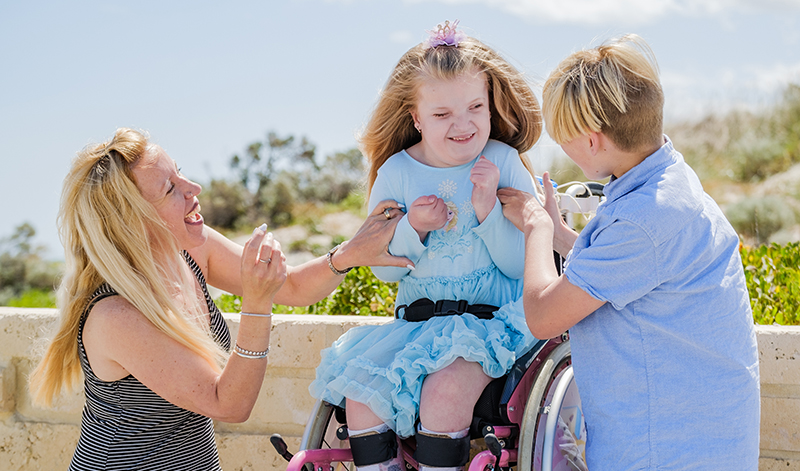
In WA, 60,000 kids live with a rare disease, and of those about half do not have a diagnosis. At The Kids, researchers are leading the charge in developing a method to identify genetic variations, so that kids like Charlotte can get answers.